Prepper President
A leader who makes sure the warehouses are full before the disaster hits — not after.
A "Prepper" is someone who prepares for trouble of all kinds — gathering skills and supplies so that when disaster comes, people don't have to suffer through it unprepared.
A Prepper President is a leader who makes sure the warehouses are full of disaster supplies before the disaster arrives. That takes three roles at once: a Scout, a Marine, and a Caregiver.
The Mottos
Rosalynn Carter often observed that caregiving touches everyone eventually — we've either done it, we're doing it now, we'll do it someday, or we'll need it ourselves. — Paraphrased from Rosalynn Carter
Margaret Mead argued that world-changing action has never come from anyone but a small, committed group of people who genuinely cared. — Paraphrased from Margaret Mead, Anthropologist
Can you think of leaders who are the opposite of a Prepper President?
Restore vs. Upgrade
FEMA's rules say that after a disaster, the agency will pay to restore what was lost — but not to upgrade it. After Hurricane Maria's catastrophic damage to Puerto Rico, FEMA spent far more restoring the island's old, fragile power grid than it would have cost to upgrade it to something sturdier.
We'd like to see FEMA's mandate shift from "Restore" to "Upgrade" — paired with more advance preparation, so less has to be rebuilt in the first place.
- 01
Fund upgrades, not just restorations. Rebuilding to the old standard guarantees the same failure next time.
- 02
Invest before the disaster, not just after. Pre-positioned supplies and hardened infrastructure cost less than emergency response.
- 03
Reward situational awareness. Regions with a known risk profile — fire, flood, storm — should be required to plan for it, not surprised by it.
Experience Stories
I visited Ananda in about 1980. Every new arrival got the fire prevention lecture first thing — because in 1976, the entire property had burned to the ground. After that fire, they rebuilt with fire-resistant structures, added fire hoses throughout the grounds, and made sure everyone received at least basic fire-awareness training. They never wanted to go through that again — so they upgraded, not just rebuilt.
When disaster scenes show up in the media, the honest answer to "who was in charge of preventing this?" is usually no one. And yet people act surprised, even after countless warnings about pandemics, fires, floods, famine, war, and ice storms.
Situational awareness means noticing what's actually happening around you and being ready to respond. A region with dry Santa Ana winds, months without rain, and a known fire history has no excuse for being caught flat-footed. See our related idea: LA Build Back Better.
There's a second, quieter kind of situational awareness worth naming: when the local hardware and home-improvement store carries almost nothing made in your own country, and almost nothing you buy is even repairable. That's a supply chain built for disposal, not resilience.
The Worst-Case Scenario Survival Game
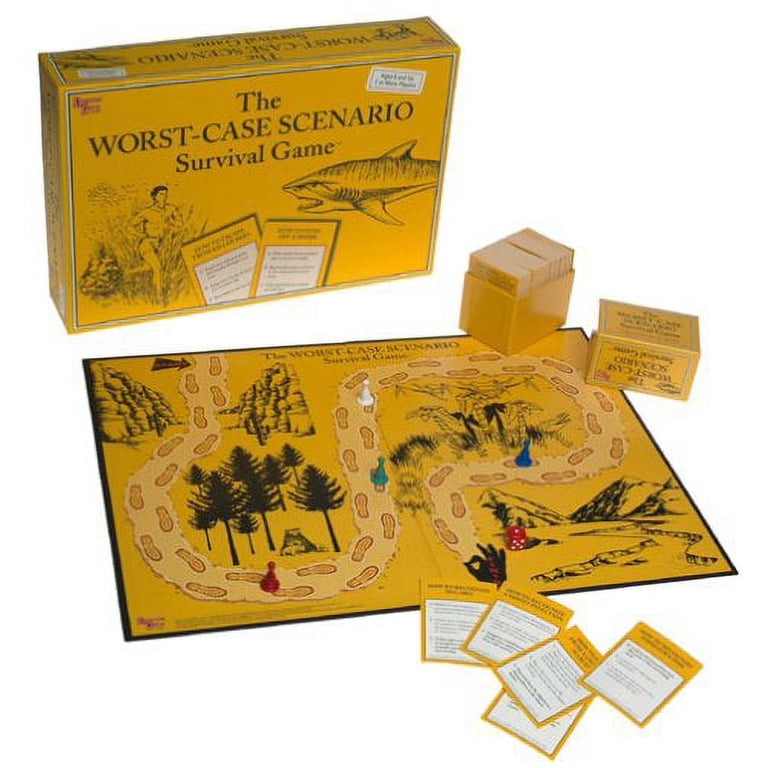
A survival-themed trivia board game that asks players how they'd respond to unusual, dangerous, and sometimes comic emergencies — choosing from possible answers to questions about escaping a threatening situation or handling an unexpected mishap, with correct answers moving a player toward the finish. Based on the Worst-Case Scenario book series by Joshua Piven and David Borgenicht.
- →
Designed for two or more players
- →
Combines trivia, discussion, and hypothetical problem-solving
Survival Skills in General
Real survival skills are less about dramatic stunts and more about staying calm, recognizing the greatest immediate danger, and making careful decisions with limited resources. Preparation, judgment, and practiced fundamentals usually matter more than specialized equipment. The right priorities depend on the setting, weather, injuries, available shelter, and how quickly help can arrive.
Pause, look for hazards, account for people, check weather and surroundings, and avoid turning one emergency into two.
Learn how to contact emergency services, control serious bleeding, support breathing, recognize shock, and use a first-aid kit.
Protect yourself from heat, cold, wind, rain, and unsafe structures. Staying dry and managing body temperature can be urgent.
Know how to store and treat water using reliable methods. Avoid unknown plants, contaminated food, and risky shortcuts.
Carry a map, compass, light, whistle, and charged communication device. Tell someone your route and expected return time.
Keep appropriate supplies, make household and travel plans, learn local hazards, and practice skills before an emergency occurs.
Move away from immediate danger, call or signal for professional help when possible, address life-threatening injuries, and then protect against exposure while conserving energy and supplies. Do not attempt a technique for the first time during an emergency if a safer option is available. A Useful Priority — Certified first-aid, wilderness-safety, and local emergency-preparedness courses provide the best foundation
Independent informational reference; not affiliated with or endorsed by University Games, Walmart, Amazon, or BoardGameGeek. Product names and images belong to their respective owners. Links are provided for identification and further reading; availability may change.